

This past week, little Andy, who is three, asked me to put sixteen minutes on the timer for him. He loves to have a timer set for him whenever we’re going to be heading out or if he has a nap coming up. I always ask how long he’d like on the timer. He used to say three minutes, ‘because I am three’, but more recently his favourite number is sixteen. Either way, I set the timer for ten minutes. It seems to work.
Andy’s little. He’s just starting to figure out time. He’s sorting out yesterday and tomorrow, and the tomorrow after tomorrow. He asks how long it will take to get to a certain place, and his brain is starting to appreciate what a ten-minute drive feels like, or a half hour drive. When you are young, a half-hour can feel like infinity. It’s not unusual for us to hear a voice from the back of the car telling us that ‘This is taking FOREVER!’. I remember that feeling as a child.
On the other hand, my friends closer to the right-hand side of the continuum of life frequently mention how quickly time goes. ‘Where did March go?’, I heard this week. It was the same with January and February, and before that it was ‘Where did 2024 go?’ Time is flying faster than we can believe and faster than we want. We have no more ability to make it slow down than Andy and Ben do to make it speed up.
I wondered why time, such a precious commodity, is experienced so differently in different situations and at different ages, and so I did a little digging. It turns out there are two main reasons this happens. One of them is something I had wondered about. This theory is based on numbers, and I suspect that’s why my brain went there.
This theory is officially called The Proportional Theory of Time, or Log Time. Simply put, as we age, a year becomes a smaller fraction of our entire lives up to that point. A year for a 5-year-old is one fifth (or 20%) of their life so far, but a year to a 50-year-old is one fiftieth of their life (or 2% of it) so it seems to pass ten times faster. Most adults would agree with this.
The second theory, which is not in contradiction to the first, (thank heavens because if I had to choose between it and numbers….) but rather is a second contributing factor to the differences in the ways we feel time as we age, is information processing. The brain encodes novel experiences much more richly than it does everyday, ordinary experiences. It’s as though novelty is stored as high definition, but for experiences that we’ve had several times, the brain is already familiar with them, so it doesn’t bother expending much energy storing them. Unless there’s something different about them, the brain just encodes a faint trace.
This explains why you can easily recall the details of any new experience, but forget what you had for lunch two days ago (or sometimes even today).
As children, everything is new, so all experiences are richly encoded in the brain. With so much information and data being processed, children have the sense that time passes very slowly. This explains why we sometimes have memories of going from point A to point B as a child, and recalling the distance to be so long, yet when we travel the same route as an adult, we can be shocked to discover how close it really was.
For adults, with much less data processing happening in the brain, we have the sense of time moving quickly. In terms of car trips, I notice that the trip to any new place always seems to take longer than the same trip home. I guess this is because on the way the scenery is new, and I really have to pay attention. In other words, my brain is busy. But on the way home, the route looks somewhat familiar, and my brain doesn’t have to work nearly as hard. Throw in a bad snowstorm on the way home and the trip feels so much longer.
In general, the more information our minds process, the slower times passes. Time speeds up with increasing age because most of us have fewer new experiences, allowing our brains to relax. We can stop time speeding up by bringing new experiences into our lives and by living mindfully.
Most of us can think of a time when we’ve wished time would slow down, or perhaps we wish we simply had more time; more time with loved ones, more time on a holiday, more time to do what fills us up. As our parents age, and as our grandchildren, children and even we, age, we say we want more time. However, I don’t think what we want is more minutes. I think what we want is more precious time. We really don’t want more time to watch television, or even to work. We don’t want those mundane familiar days that pass so quickly. We really do want more moments when we feel alive, when we experience something new, when we fully connect, when we deeply understand one another, when we laugh until we cry, when we witness beauty, and when we hold a hand in ours, instead of taking it for granted, we memorize the feel of it.
This weekend Jim will celebrate his 70th birthday. Time is flying by. I invited his mom to send a video of herself singing, as Andy calls it, ‘the Happy Birthday song’. Usually each year, she calls and when Jim picks up the phone she sings it to him. But this year, I hoped she could manage a video. She is 95. Time is flying by. Jim hasn’t seen the little video yet, which I understand took many tries, and help from her dear friend Jane. I know that when Jim sees it, time will slow, and slow more, as he cherishes this sweet moment. He will not forget it. It will become a memory, making it feel as though it takes up more time than it actually did. May we all create such moments. Time is flying by.
My inquiry for you this week is, 'How am I using this time?'
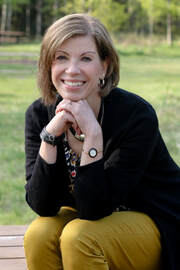
Elizabeth is a certified professional Leadership Coach, and the owner of Critchley Coaching. She is the founder and president of the Canadian charity, RDL Building Hope Society. She works with corporations, non-profits and the public sector, providing leadership coaching. She creates and facilitates custom workshops for all sizes of groups and has expertise in facilitating Strategic Plans for organizations. Contact Elizabeth to learn how to slow down time.


 RSS Feed